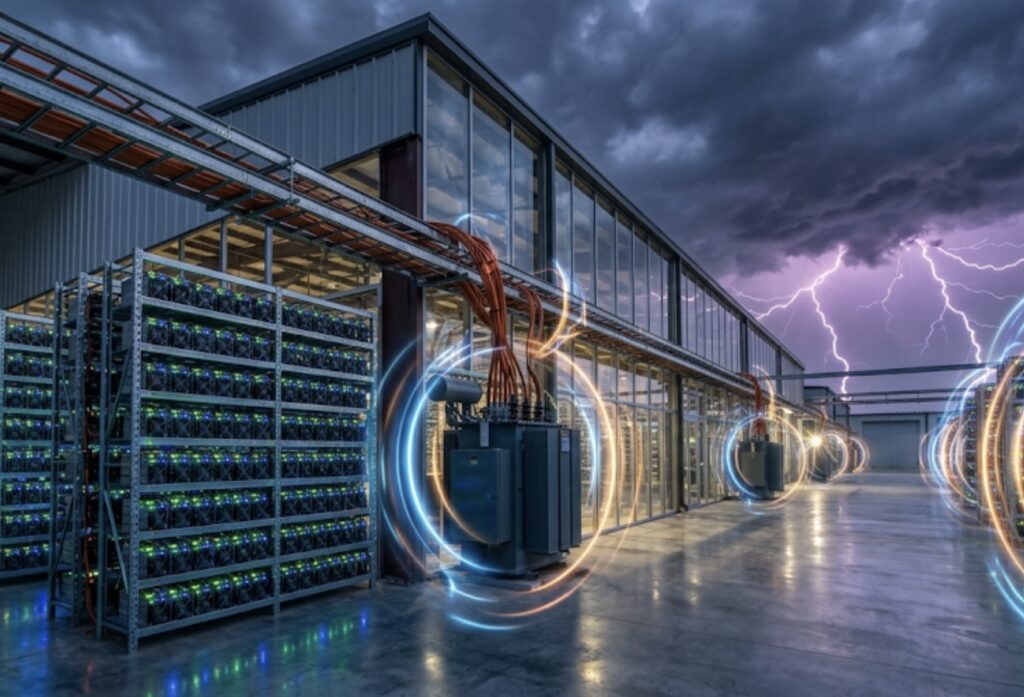
Bitcoin is Stored Energy
Most people see Bitcoin as a number on a screen, a speculative token that fluctuates wildly. But peel back the headlines and you’ll find something…

The Cambridge Centre for Alternative Finance (CCAF) is a research centre at the University of Cambridge Judge Business School. Our mission is to create and transfer knowledge addressing emergent gaps in the financial sector that supports evidence-based decision-making.
Pierre Rochard chat with Saifedean Ammous about the Economics of Bitcoin Mining.

From Daniel Batten: GreenpeaceUSA’s Change the Code campaign has been suspended. As of today, there’s been no action, posts, or media releases for 6 months…
We are talking big numbers here. Long interview grab yourself a beer and enjoy.

Daniel Batten: in July 2023, GreenpeaceUSA published a report “Investing in Bitcoin’s Climate Pollution”. My rebuttal argues that the report recycles many already widely-debunked claims about Bitcoin, uses unsubstantiated fear about “what might happen” rather than evidence to influence readers, and repeatedly avoids important contextualizing information in order to present a skewed and in many cases false appraisal of Bitcoin.
The difference between Cambridge (CCAF) and Bitcoin Mining Council (BMC) data on sustainable energy use of the Bitcoin Network is primarily due to CCAF underreporting, not BMC over-reporting of sustainable energy use, as many in the media have assumed.

Nic Carter’s response to the White House Office of Science and Technology Policy (OSTP) study into the climate impacts of crypto mining.
LYN ALDEN, August 2021, updated December 2021 – Bitcoin’s energy usage is a rounding error as far as global energy usage is concerned. And I mean that literally; when scientists estimate that the world uses a certain amount of energy in a given year, they can easily be off by a couple percentage points in either direction, let alone a couple tenths of a percent. Bitcoin is estimated to use less than one tenth of one percent.
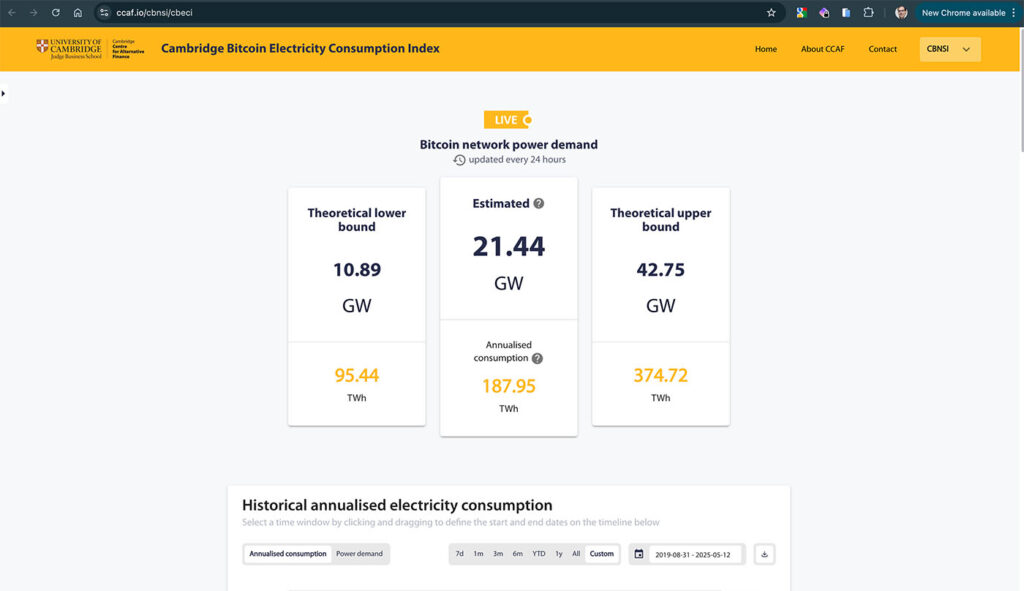
The Cambridge Bitcoin Electricity Consumption Index (CBECI) provides an up-to-date estimate of the Bitcoin network’s daily electricity load. The underlying techno-economic model is based on a bottom-up approach initially developed by Marc Bevand in 2017 that uses the profitability threshold of different types of mining equipment as the starting point.