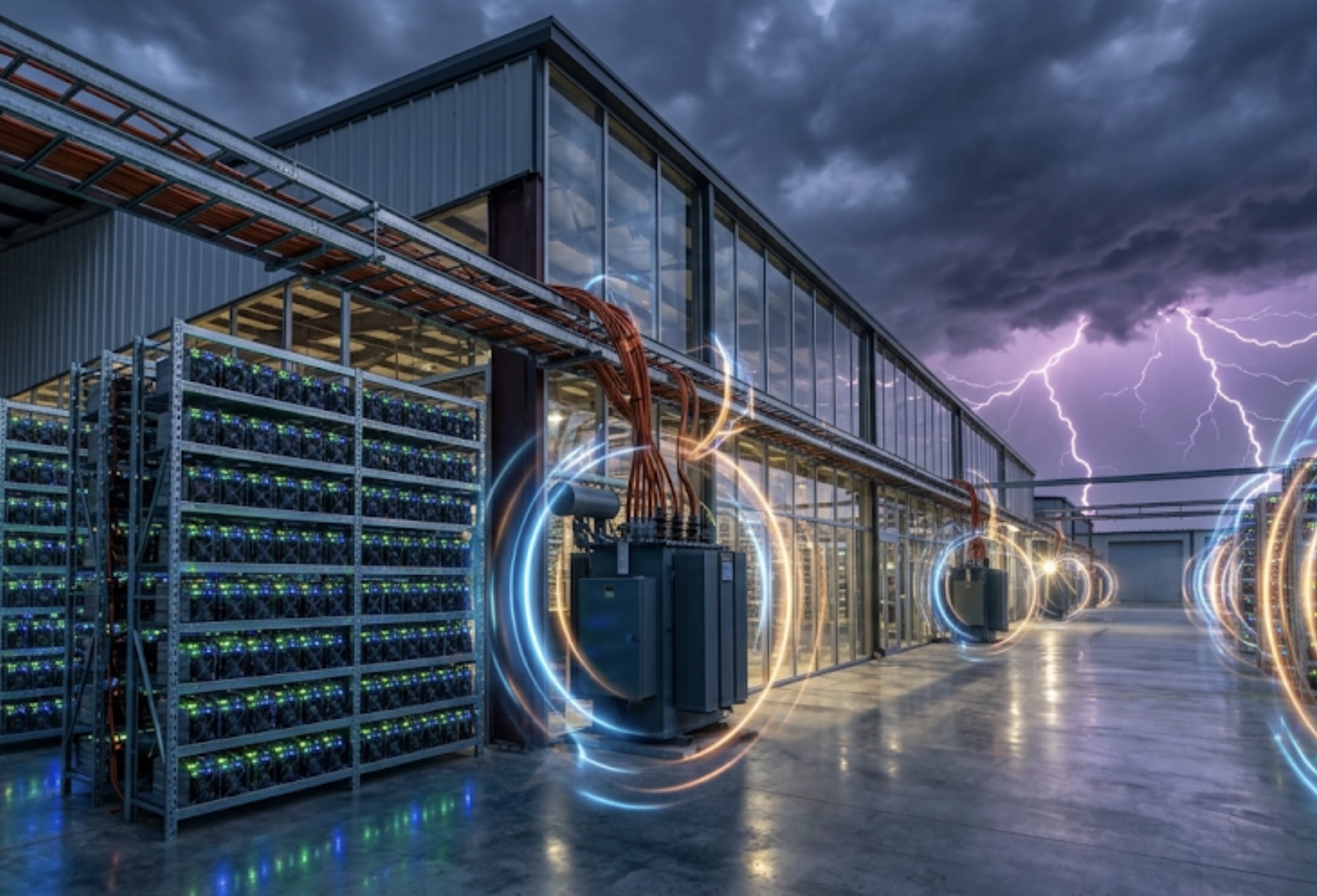
Most people see Bitcoin as a number on a screen, a speculative token that fluctuates wildly. But peel back the headlines and you’ll find something solid underneath: Bitcoin is literally built out of electricity.
Unlike government money, which can be printed with a keystroke, every bitcoin is minted by solving brutally hard mathematical puzzles that require massive amounts of real-world power.
In a very physical sense, energy is fed into the network, and Bitcoin comes out the other side. That’s why it’s fair to say Bitcoin is “backed by energy” its value is anchored in the one thing no central bank can counterfeit.
The key lies in Bitcoin’s engine, called proof-of-work. Miners around the world race to verify transactions, and to do so they convert electricity into computational effort.
This effort doesn’t just create new coins; it secures the entire ledger with a wall of hashing power that makes tampering astronomically expensive. In short, energy is the true resource being spent, and Bitcoin is the digital receipt.
Pierre Rochard, a well-known Bitcoin researcher, puts it bluntly: “Bitcoin is backed by energy.” What he means is that the cost of producing one bitcoin is fundamentally a function of the electricity consumed—a cost floor that gives the asset a tangible link to the physical world, much like how gold’s value is tied to the immense energy of mining and smelting ore.
That link becomes even more compelling when you consider where Bitcoin is driving innovation. Researcher Daniel Batten has extensively documented how Bitcoin mining is becoming a catalyst for renewable energy development and methane mitigation.
Mining operations can turn waste gas from landfills and oil fields into useful electricity, and they can act as flexible “buyers of last resort” for stranded renewable power, making solar and wind projects economically viable where they previously weren’t.
This means the energy that backs Bitcoin isn’t just raw consumption, it’s increasingly sustainable, grid-stabilizing, and waste-reducing. Batten’s data shows that Bitcoin mining is the only major industry where a growing share of power comes from low-emission sources, largely because miners are incentivized to seek out the cheapest electricity, which today often means otherwise-wasted renewables.
So when someone says Bitcoin is backed by nothing, they’re missing the physical reality.
Bitcoin is backed by the work of thousands of miners pouring electricity into a network that can’t be faked, inflated, or broken.
That energy is converted into a digital asset that can be transmitted anywhere in an instant, with no permission needed. In a financial system full of imaginary numbers and endless money printing, Bitcoin is a piece of real-world energy crystallized into digital form, and that’s a foundation no narrative can undermine.